Geneseo First United Methodist Church asked BLDD to develop a master plan for its downtown location, which is adjacent to a residential area and the City Center. This challenging site included multiple city blocks and required building additions and renovations. In order to accomplish these goals, a phased master plan was created. This plan supports growth in all church ministry areas including: worship, gathering and christian education space for all age groups.
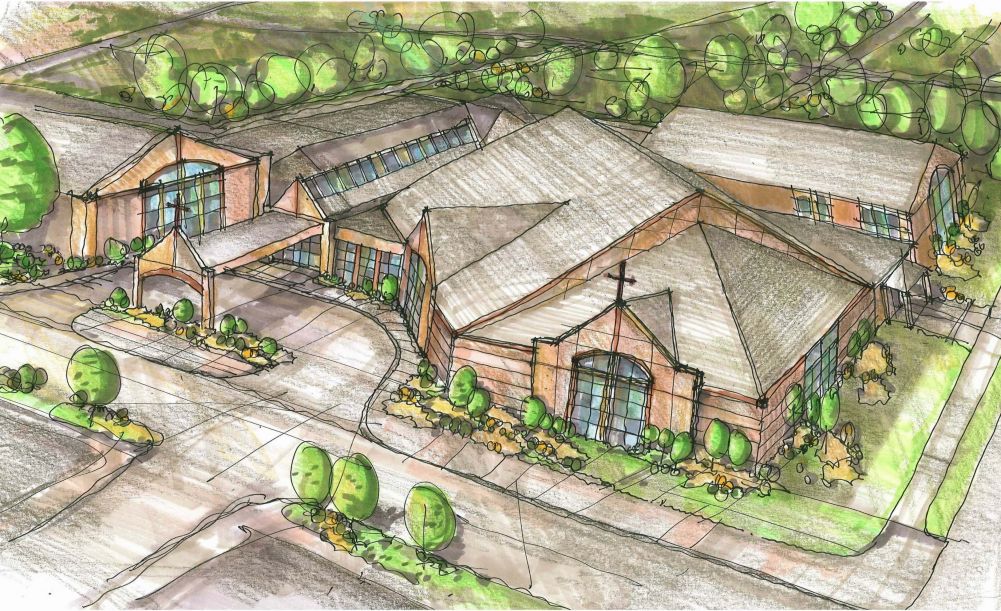
How do we double the size of the church with a limited plot of land while creating a seamless connection between the old and the new, with flexibility for future growth?
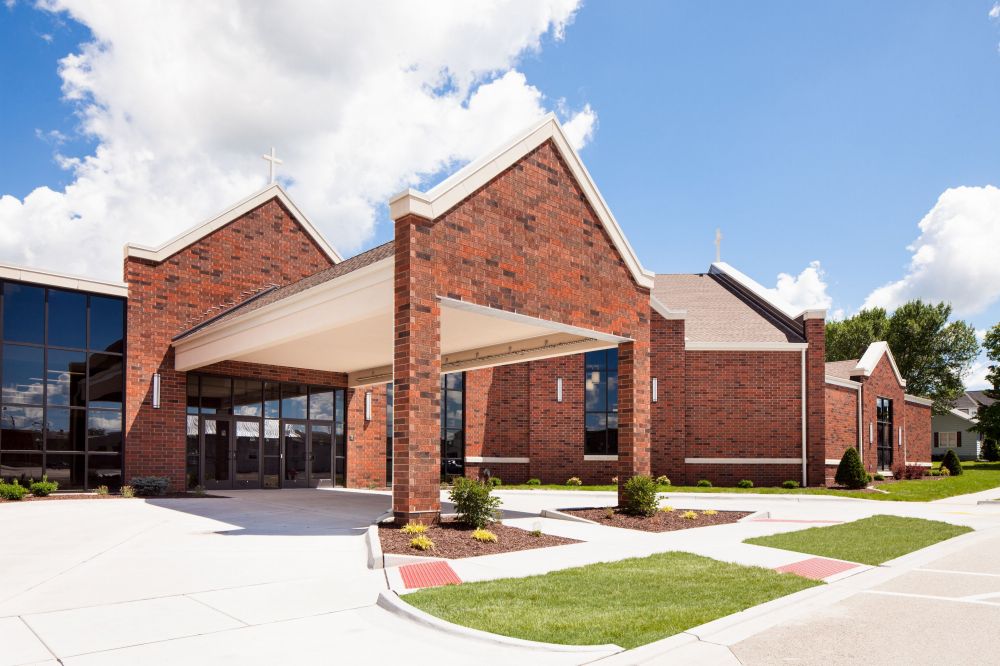
Developed a master plan that included closing the street, connected the church lot to an adjacent lot, built the new church over existing road way; allowing for expansion and flexbility.
- Gathering space
- Information center
- Cafe
- Kitchen
- Portico
- Multi-purpose sanctuary
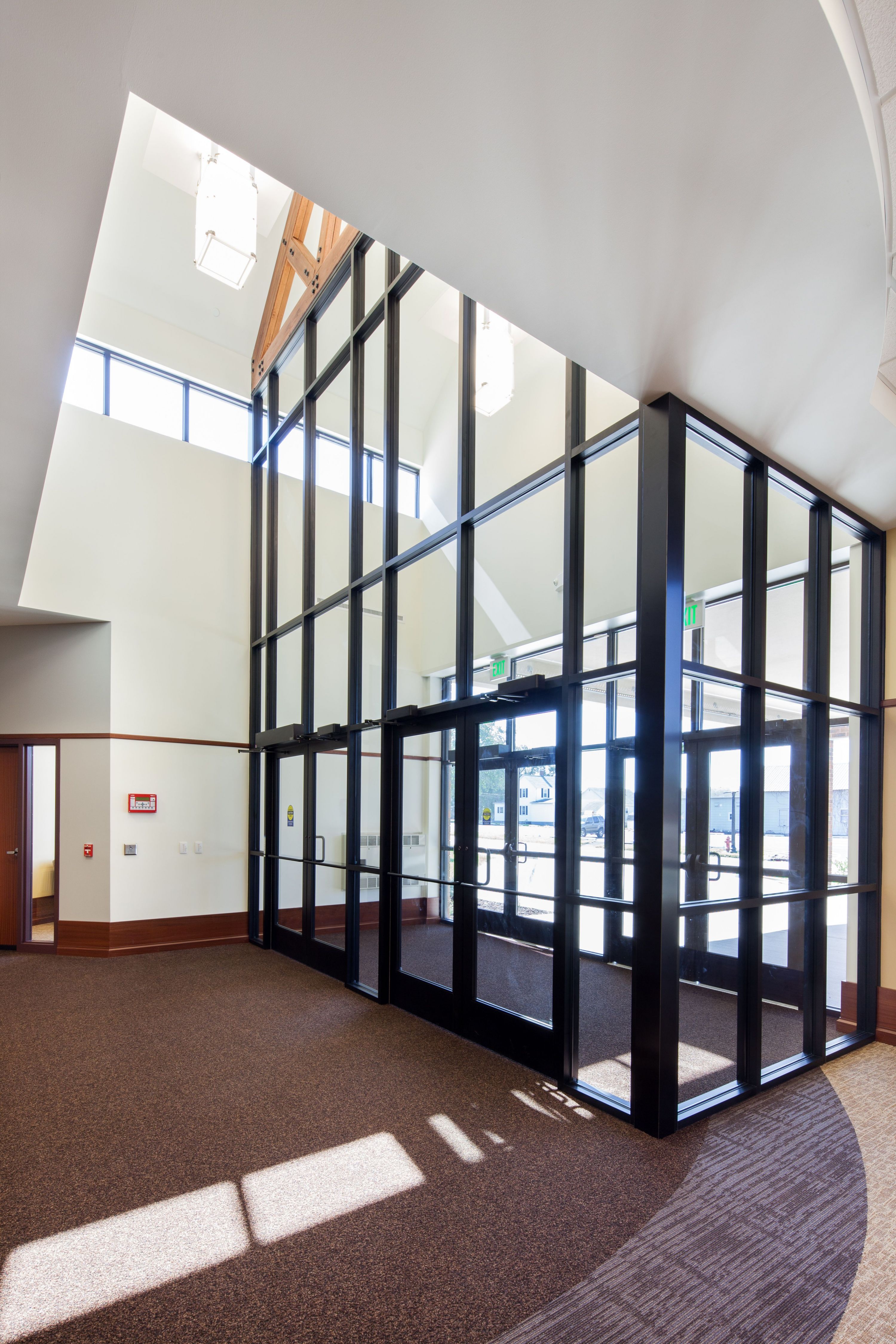
Three-dimensional wooden facade and ample window lighting assist in breathing natural life into the space, which has been proven to enhance performance within learning environments.
Wide hallways with integrated accessibility ramps provide continuous, unimpeded stress-reducing traffic flow.

As a result of developing a master plan, a fellowship hall was constructed to connect the church’s three buildings into one contiguous facility. The fellowship hall was designed to accommodate a temporary worship setting during subsequent phases when the 1895 sanctuary building was being refurbished.
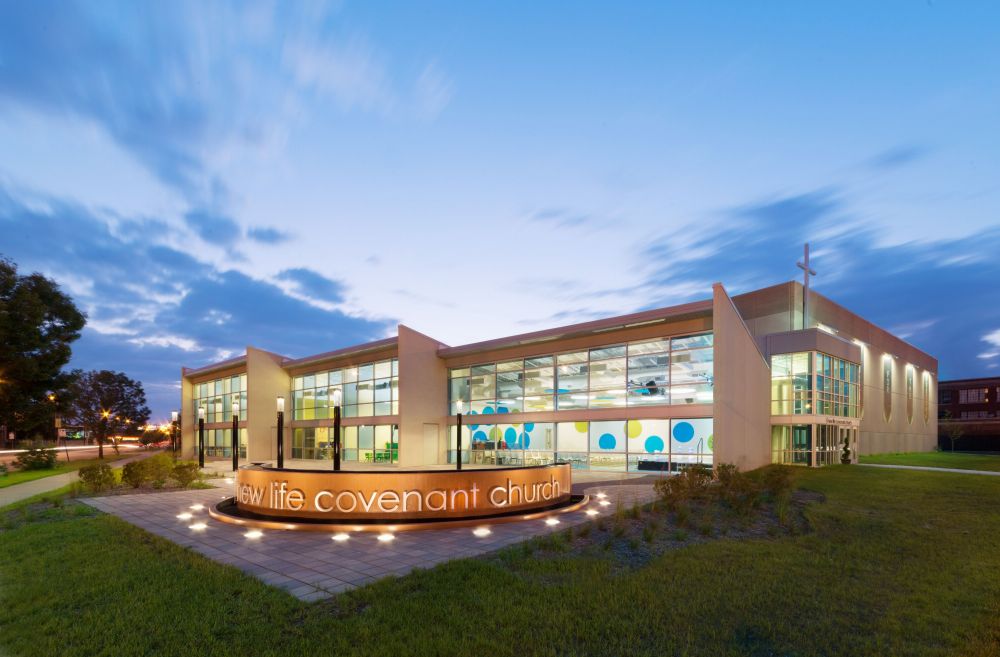
New Life Covenant Church was designed to provide much needed space for the quickly growing congregation in the urban setting of the Humboldt Park community of Chicago. With Reverend Wilfredo De Jesus’ (Pastor Choco) vision that “nobody is beyond the grace of God,” the church began to look for a place to house its growing congregation.
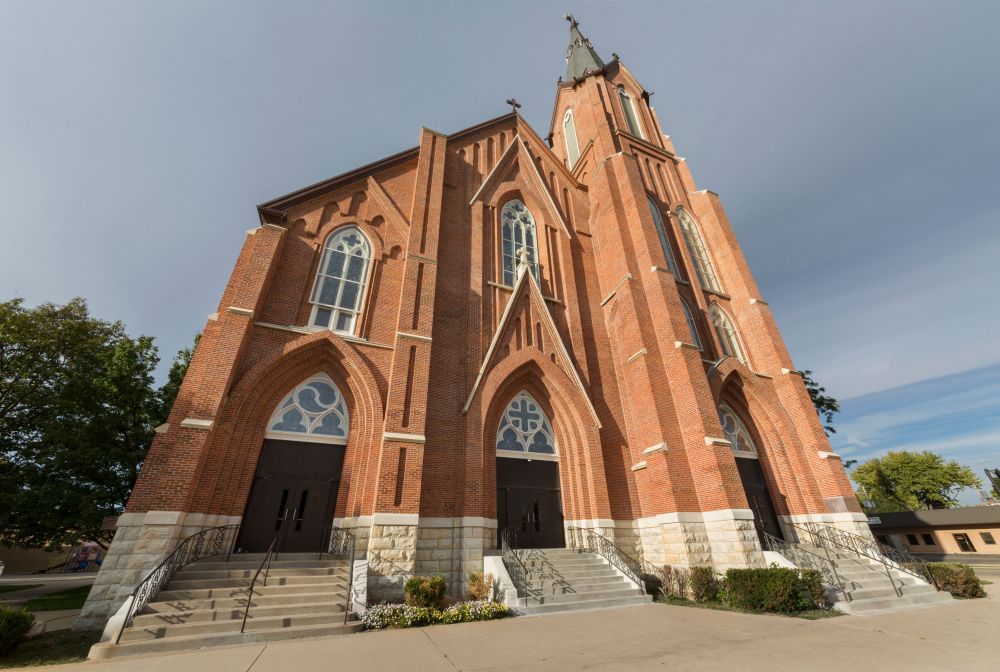
Built in 1882, St. Columba Catholic Church was in need of preservation and restoration. The church was searching to find a solution for major exterior deterioration issues. As a significant landmark in Ottawa, it was important to develop a 100-year solution, not just a 20-year solution.