A space utilization study of the existing 1922 high school revealed that 60% of the existing high school was not used, rarely used, or used under capacity.
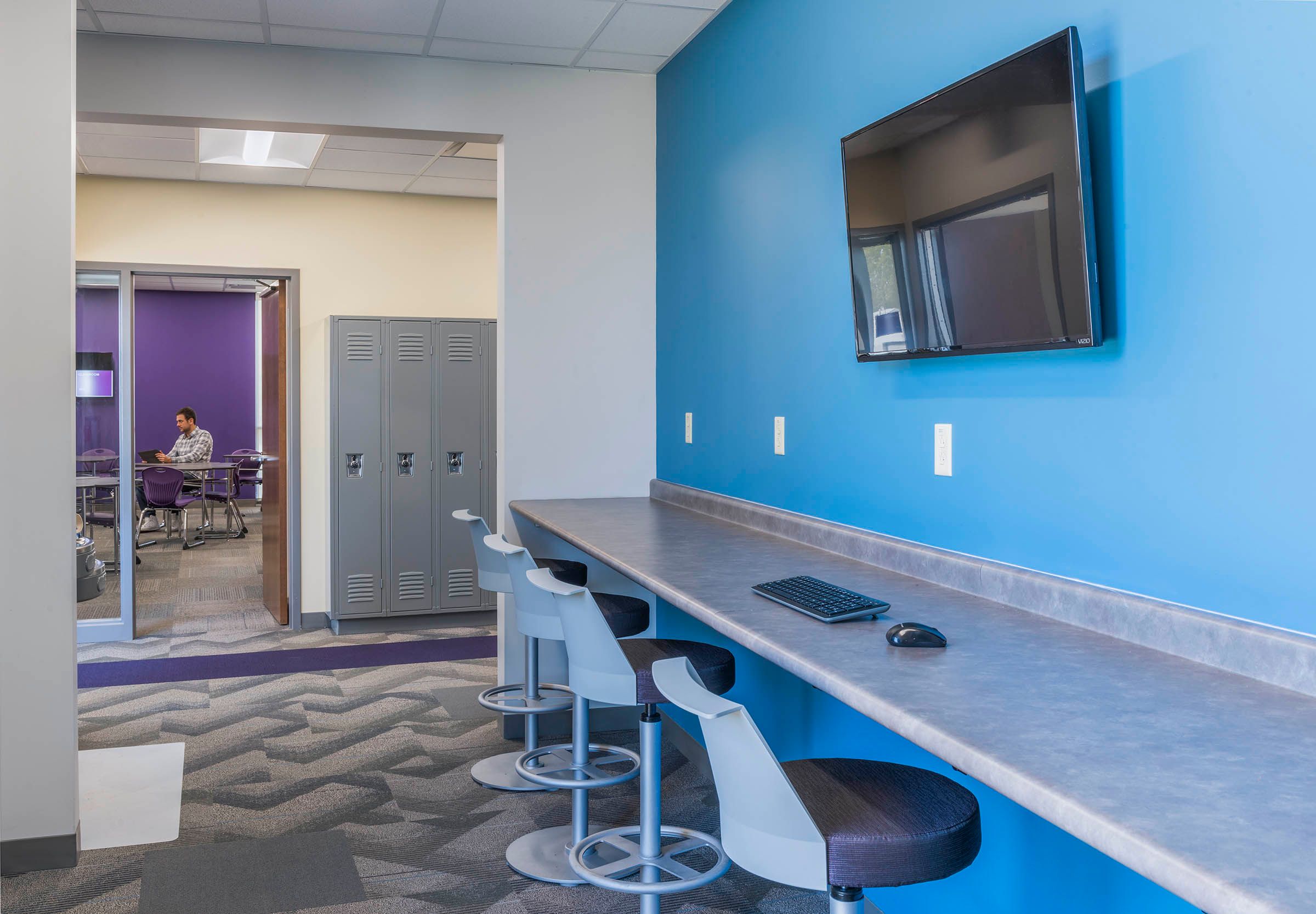
The new high school addition provides spaces that are flexible and have more than one function. Moveable walls, reconfigurable furniture, shared faculty offices, and multi-functional spaces create a 21st century learning environment in a smaller footprint.
Collaboration and coming together was a major focus in the arrangement of the educational spaces. The learning environments extend out of the classrooms and into the lobby and corridor providing a full complement of learning settings, establishing a student-centered learning environment.
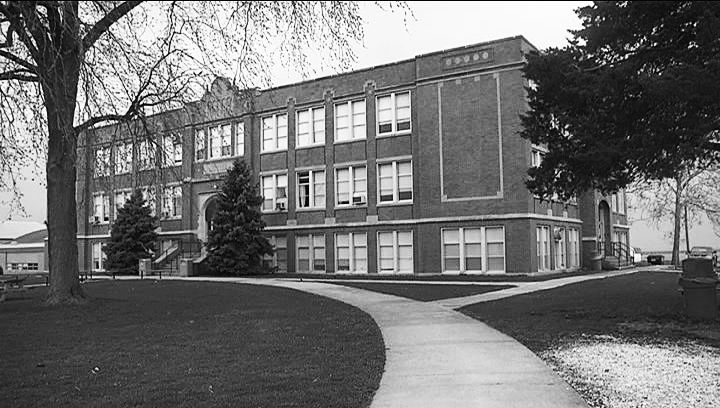
How do we reimagine an inefficient, non-accessible, aging facility to support a technology-driven curriculum for Delavan SD?
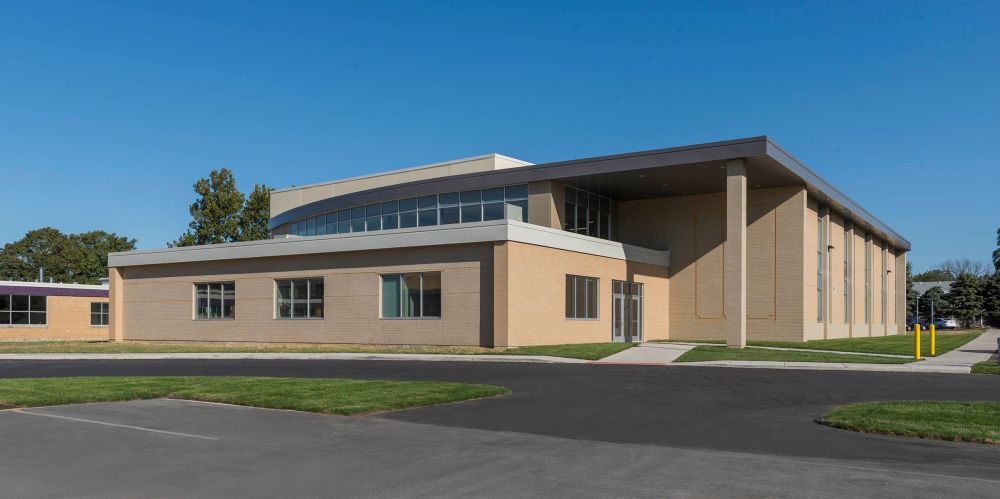
With the new, smaller footprint building placed in front of the original high school building, the district was able to create flexible spaces, and focus on student-centered learning experience, while operating during construction.
- 15% Less Space to Maintain over Lifetime
- Student-Centered Learning Environment
- Multi-Functional Spaces
- Moveable Walls, Reconfigurable Furniture
- Access to Technology Throughout Space
Implementing technologies throughout the facility eliminated the need for several computer labs while allowing access to technology at all levels of learning environment.
Shared faculty offices were included to create the ability to expand the student population by 25% and the faculty population by 15% without adding additional space in the future.
Spaces allow the basic educational suite to be used every period instead of 80% of the periods.
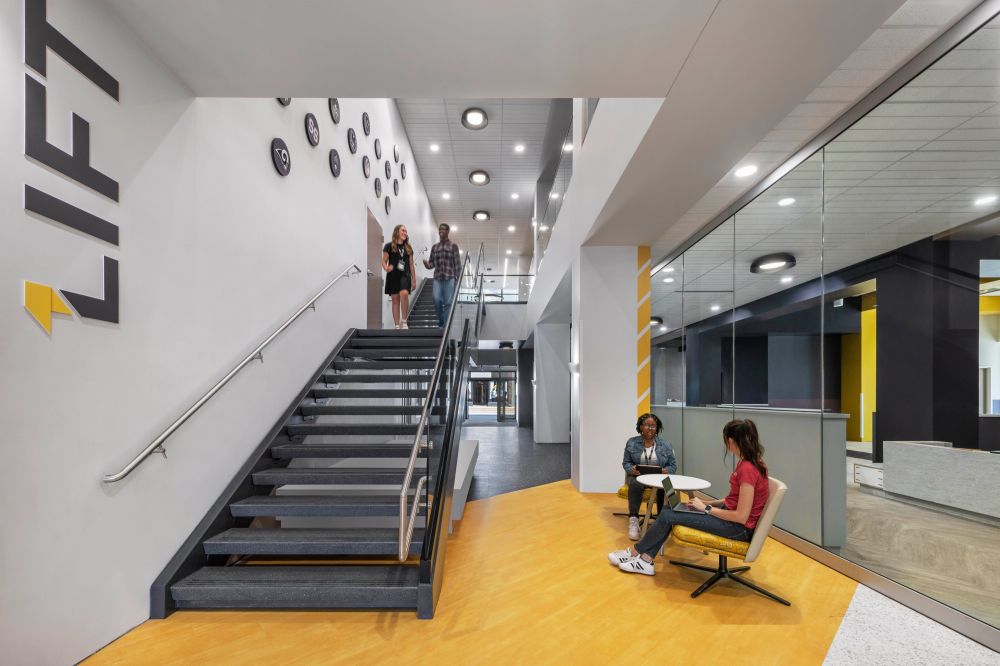
Mattoon school district's LIFT (Leaders Innovating for Tomorrow) houses a regional innovation center for the surrounding 28 school districts in the area.
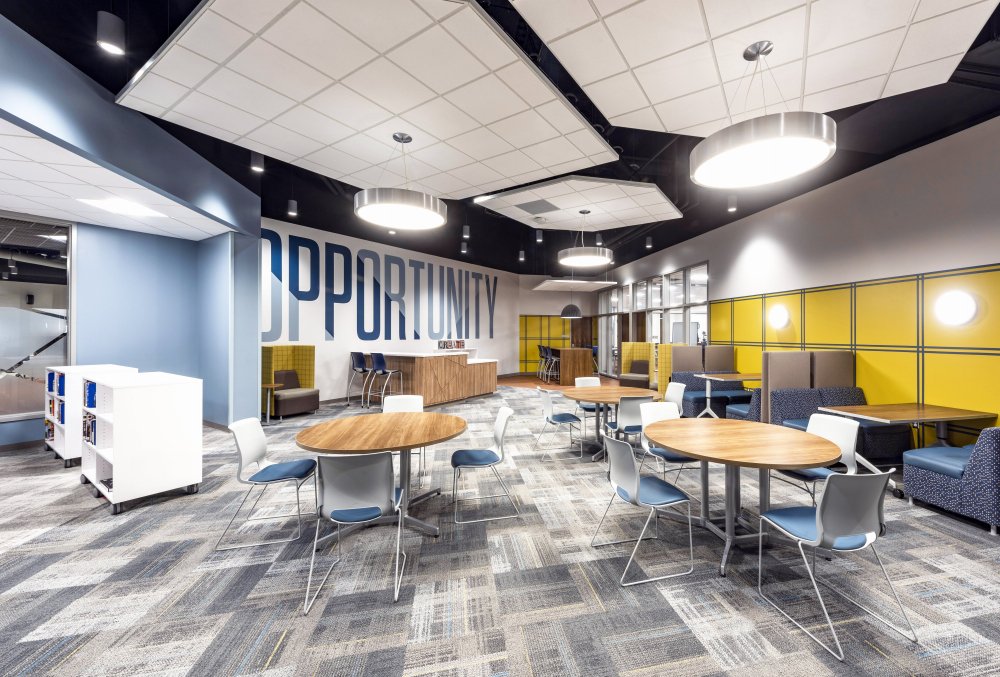
Faced with outdated high school facilities, an extensive community engagement planning process identified and assisted in prioritizing needs; ensuring a successful plan.
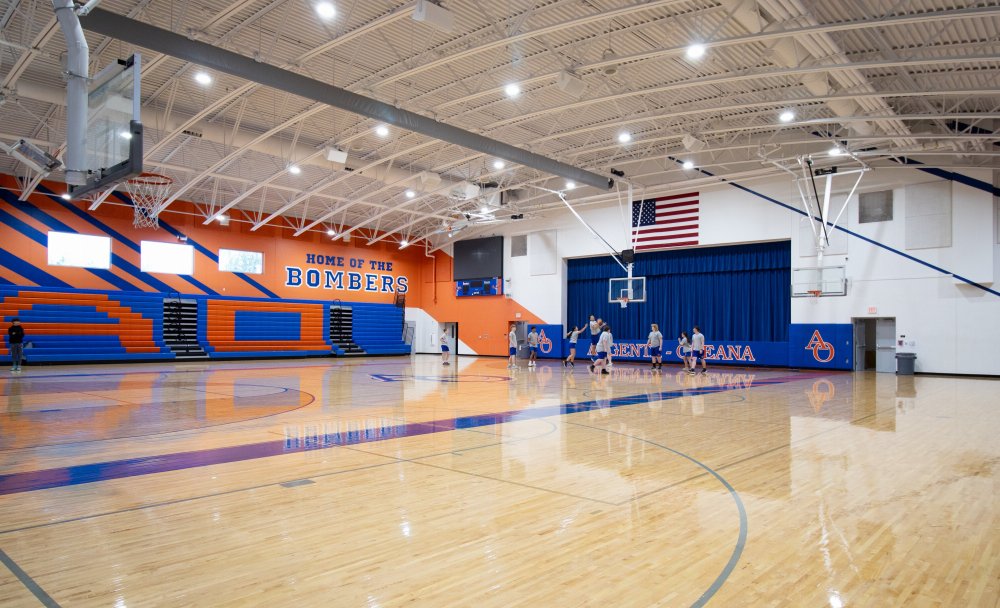
Completed in 2022, the 11,519 s.f. gymnasium replacement consisted of all new flooring and paint work, bleachers, new basketball equipment, dedicated locker rooms, and new bathrooms. Environmental branding was added to the space, featuring the school colors throughout, as well as the school logo on the exterior of the building. Renovations were also done to the lobby, adding in environmental branding and creating a welcoming space for students, staff, and the community.