The Prairie Central PK-4 Elementary school is an opportunity to unify elementary programming under one roof for the first time in district history. Not only will it mark a new location for educational programming in the district, it also will be planned to allow for future programming needs, including expansion to a PK-5 or PK-8 school in the distant future. The building is designed to support roughly 800 students with five smaller flexible environments or zones within the space. Zone One supports first grade and third grade, zone two supports second and fourth grades, zone three supports PK-K, and zone four is the large gathering spaces of the elementary, such as the gym, practice gym, stage and support. The fifth and final zone is the communal core, connecting the other five zones and supporting dining and food service, shared specials spaces, as well as the admin and main circulation core.
Classrooms are organized around each pod and paired to share an internally placed small group space, allowing for expansion and collaboration beyond the classroom. Cubbies are pushed out of the classroom into a contained and observable entry space. Each pod is has a faculty work and lounge space, interventionist spaces, student support rooms, and a dedicated resource room. The PK-K wing is organized for flexibility in the delivery of PK and K education, as well as to provide for internal gross motor play for those PK students and support for student services with small areas for intervention and support when they need to pull out of the classroom.
The 800-1000 seat elementary gym allows for the entire student body to gather in a single space. Equipment like basketball hoops and a divider curtain allow it to support elementary and middle school competition if needed. The practice gym is roughly 60% the size of the main gym, and additional seating can be added to the floor to expand seating to match that of the larger gym. The stage will be able to support performances from band, choir, and the high school drama program. This space will also serve as the storm shelter.
The communal core space supports dining and food service, the administrative office and entry points, as well as specials for all grades. Music, art, and a small K-2 media room are located on the first floor. The second floor of the core includes the expanded Media Center for books, collaboration and exploration, as well as a STEM room. There is also an outdoor learning space in the three sided courtyard between the two classroom pods.
The design of this campus is to provide a warm, inviting facility that focuses on the experience of each and every student. The creation of smaller pods, grade level organization, the collaborative common areas, and even the student storage solution are all ways to focus the solution on learners.
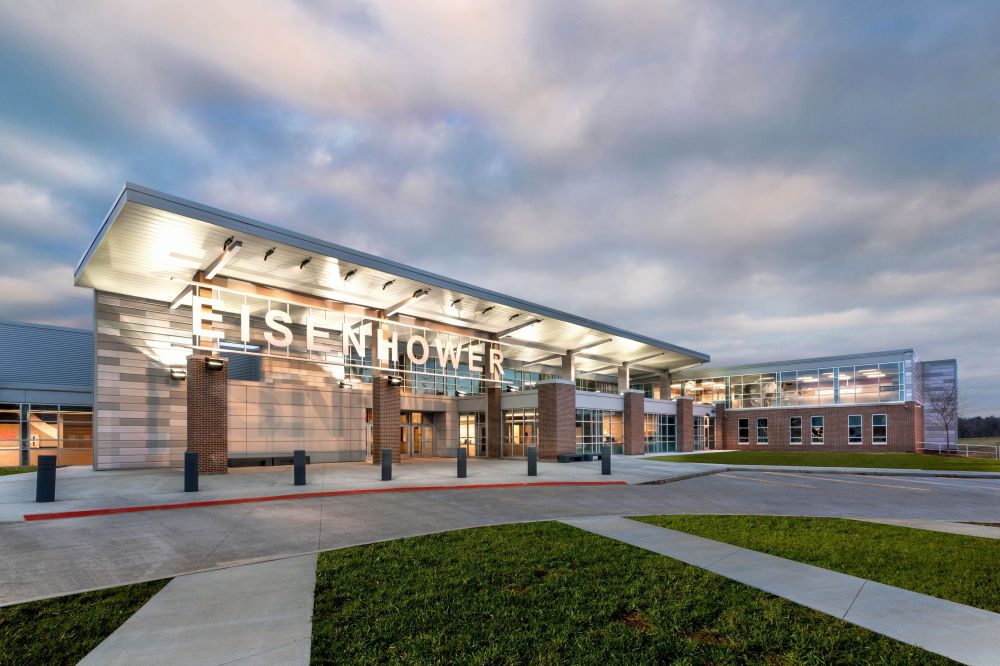
At 50 years old, the Eisenhower High School for the Decatur Public School District was physically worn, and functionally ineffective. The school district conducted a community engagement planning process to determine how best to meet the current and future educational aspirations of the community.
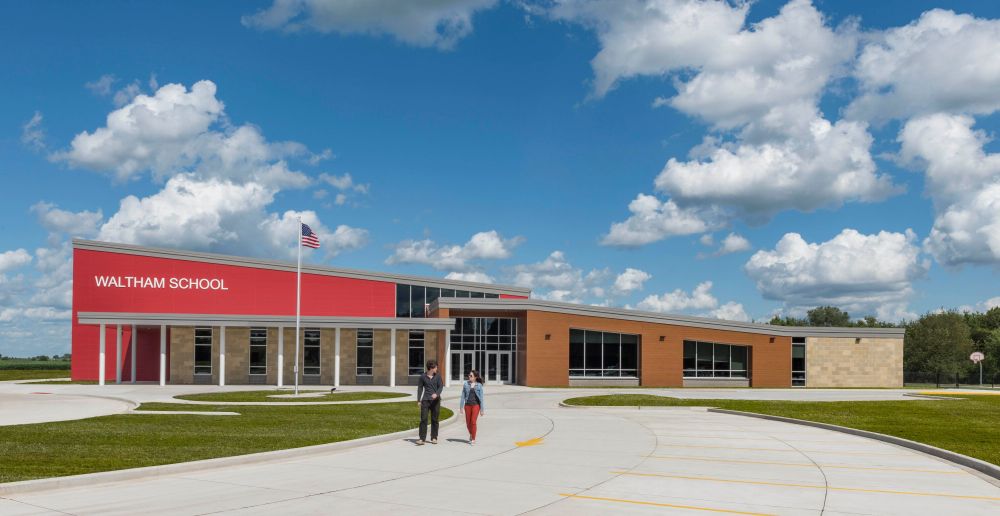
The district had two separate schools that served their small, rural student population. Both campuses needed extensive updates and lacked 21st century spaces. The new, smaller single campus school serves the district within a tighter footprint with increased 21st century program space.
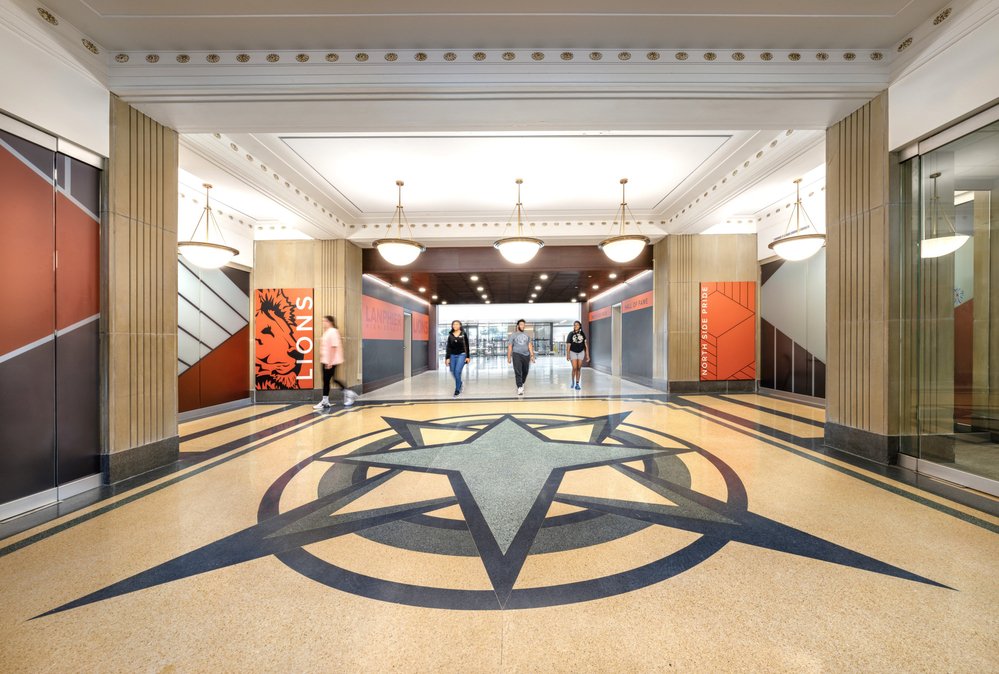
Following a successful year-long master planning process, designed to address concerns of aging infrastructure and facility inequities, Lanphier High School was identified as a top priority for revitalization among the district's three high schools.