Lessons from the Lanphier High School Transformation
Across Illinois, school districts are being asked to do more with aging facilities, often balancing tight budgets, evolving educational needs, and strong community expectations. The transformation of Lanphier High School in Springfield, IL, shows what’s possible when design is grounded in community values and clear priorities.
Built in 1937, Lanphier has always been more than a school. It’s a North Side landmark, rich with history, pride, and identity.
From day one, the goal wasn’t just to fix a building, it was to honor what Lanphier means to its community while preparing it for the future.
1. Start with what Matters Most
|
|
Through conversations with district leaders, staff, alumni, and neighbors, one thing became clear: preserving Lanphier’s legacy wasn’t optional, it was essential. Four guiding principles emerged:
These became the foundation for every decision. |
2. From Fragmented to Functional
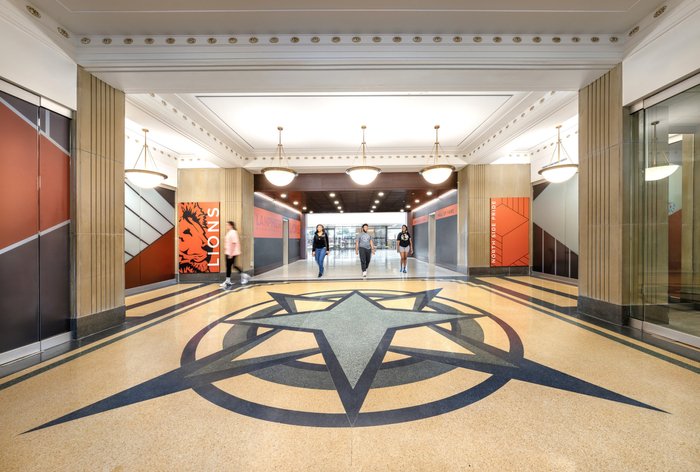
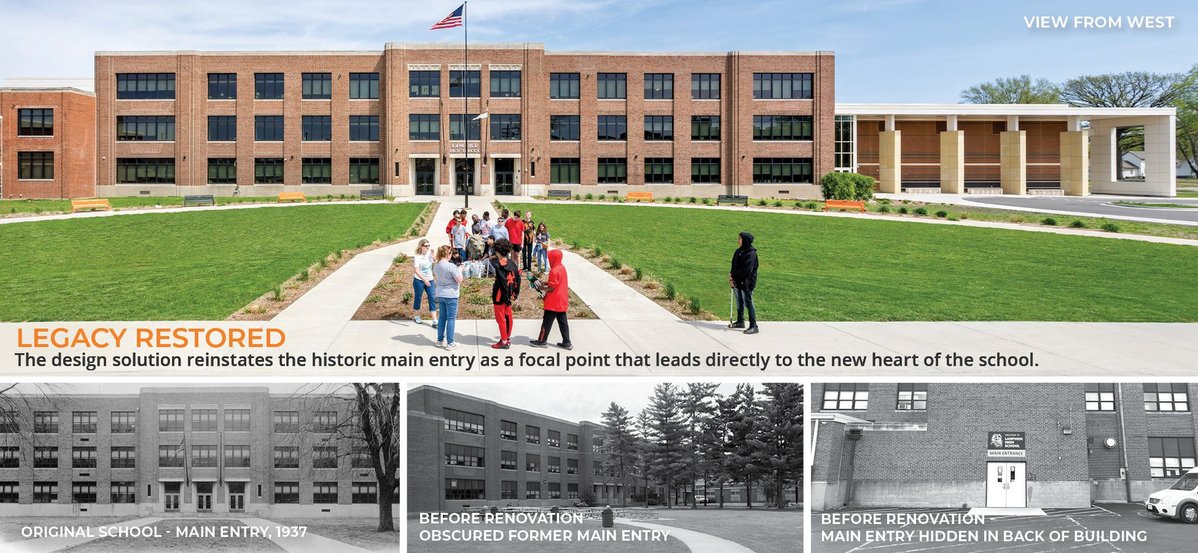
Over time, the campus had become sprawling and inefficient with 14 floor levels, long travel distances, and disconnected spaces. Students navigated a maze. The original front door? Lost and replaced with an uninviting secondary entrance.
The solution wasn’t just renovation, it was rethinking the entire experience.
By reorganizing the building down to six levels and centering academics around a shared core, the team dramatically improved flow and accessibility. Today, no academic space is more than 300 feet from the building’s center.
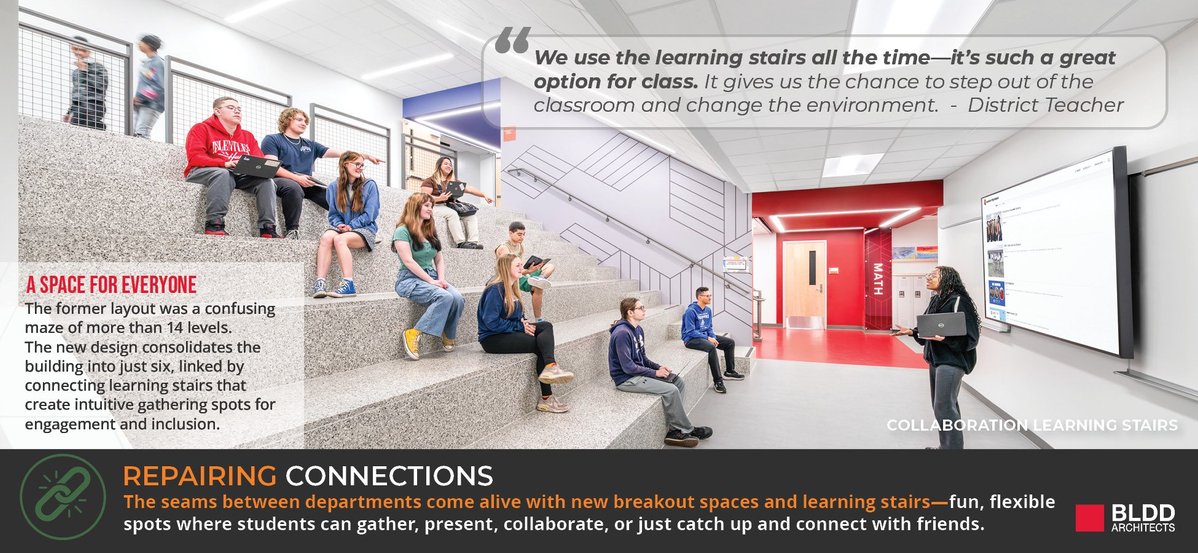
Breakout spaces and connecting learning stairs are located at the seams between academic departments, encouraging students to socialize, present, or work in highly visible “in-between” spaces.
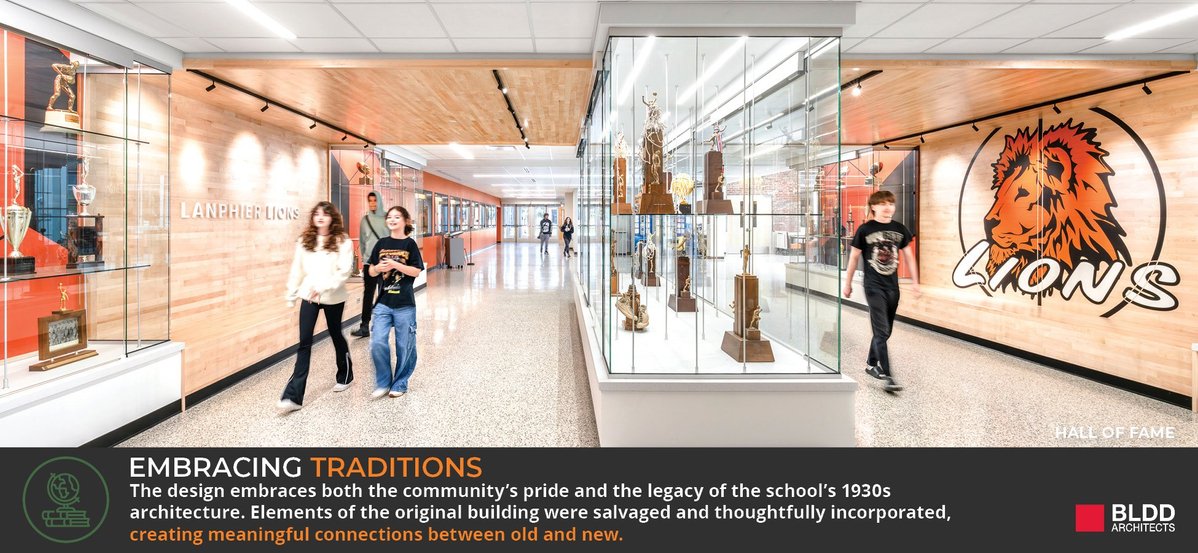
The design embraces both the community’s pride and the legacy of the school’s 1930s architecture. Elements of the original building were salvaged and thoughtfully incorporated, creating meaningful connections between old and new.
The restored rear elevation of the original school is now the backdrop for a new three-story atrium—a bright, open, and inviting space that acts as the school’s central core.
Natural light floods the space, and surrounding areas support collaboration, connection, and learning beyond the classroom. With three floors of visual access into the space, the Commons fosters a sense of openness, community, and safety, creating a new heart that connects past and present.
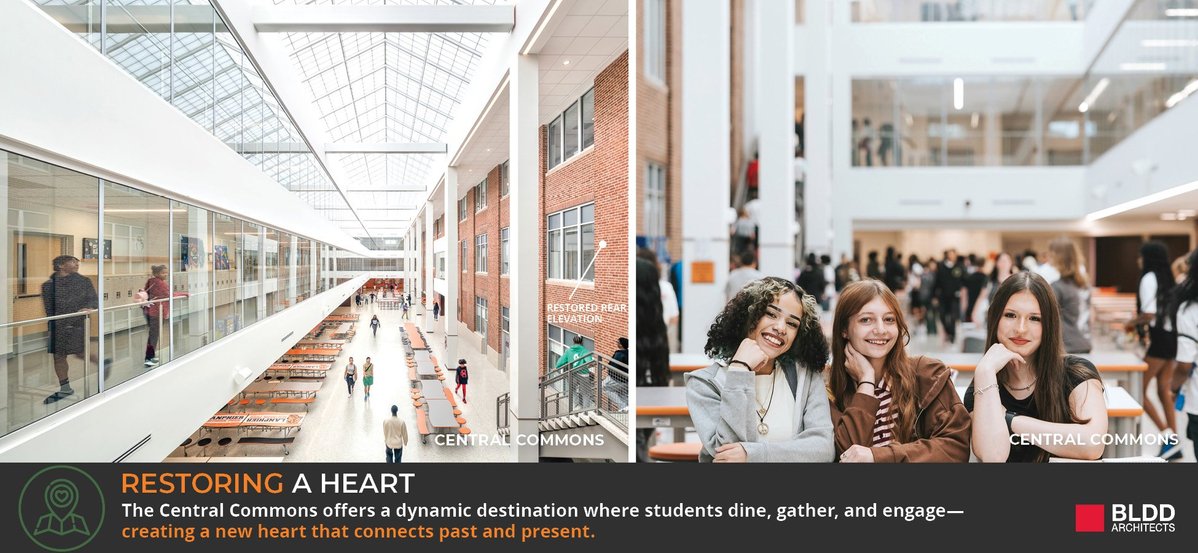
Academic spaces, performing arts, and athletics all branch from this main hub, making it both a physical and symbolic center of student life.
4. Blending Past and Present
The design didn’t try to replicate history, it respected it.
The original Art Deco building was restored and reestablished as the main entry, bringing back a sense of arrival and pride. Meanwhile, modern additions use complementary materials, textures, and detailing to create a seamless experience across generations of construction.
Over 20 unifying exterior band lines were employed to stitch together decades of construction styles. Innovative masonry and precast detailing create continuity between past and present, while thoughtful use of color and texture brings purpose and vibrancy to each space.
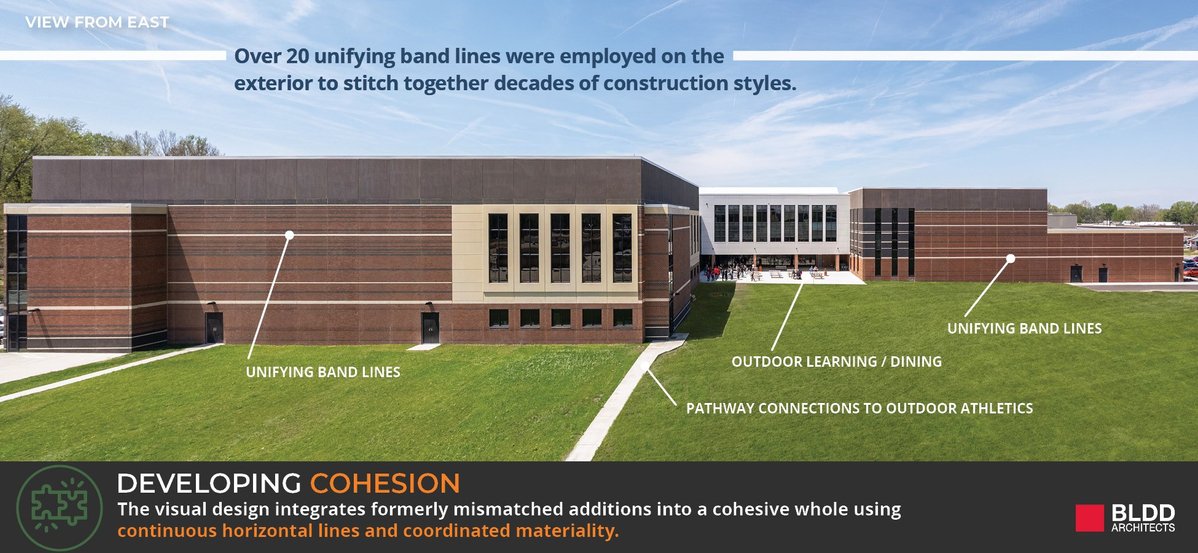
Inside, historic details are celebrated, while new spaces match their quality and warmth. Every space, both old and new, feels intentional and equitable.
5. Built for the Long Term
The transformation wasn’t just about aesthetics, it was about stewardship.
-
Daylight now reaches nearly every occupied space
-
Updated systems improve efficiency and reduce costs
-
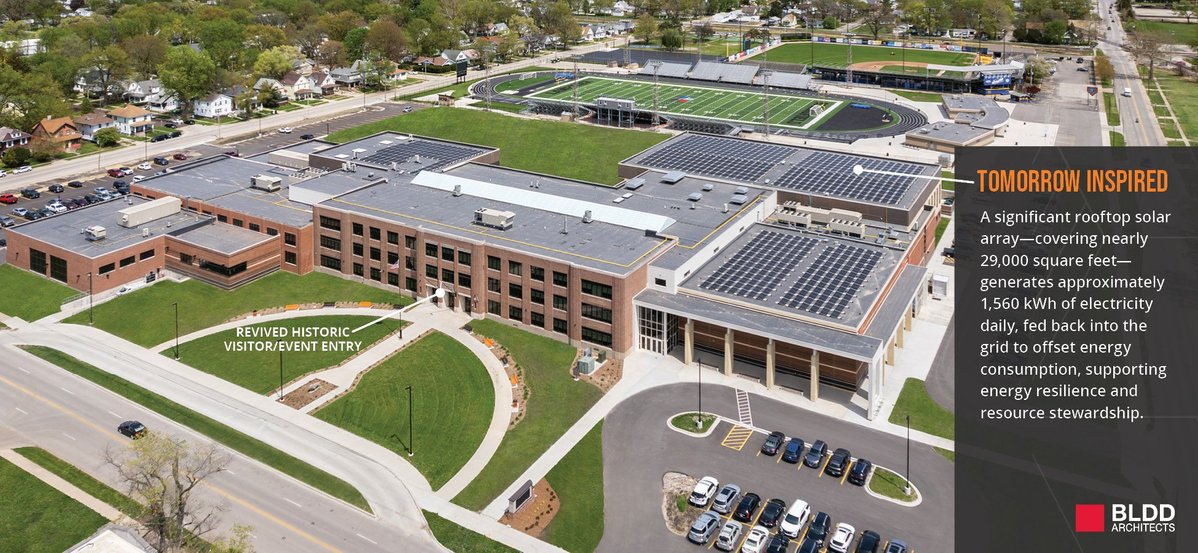
A large rooftop solar array offsets energy use
-
Safety features include secure entries, clear visibility, and a tornado-rated storm shelter
Every move supports long-term performance, safety, and student well-being.
A Lesson for Districts Everywhere
Lanphier proves that modernization and preservation don’t have to compete.
When districts listen to their communities, embrace constraints, and stay focused on what matters most, they can create schools that honor the past while supporting the future.
The result? Not just a better building, but a stronger connection between a school and the community it serves.
Read more about the transformation of Lanphier High School in Springfield, IL.

Principal | Director of K-12 Education Design |
Todd's passion for education design lies in creating spaces that enhance teaching and learning experiences. He is particularly interested in how thoughtful, efficient, and compact designs can improve educational outcomes. His work is driven by a vision to craft environments that not only meet the functional needs of educational institutions but also inspire and motivate students and educators alike.
|