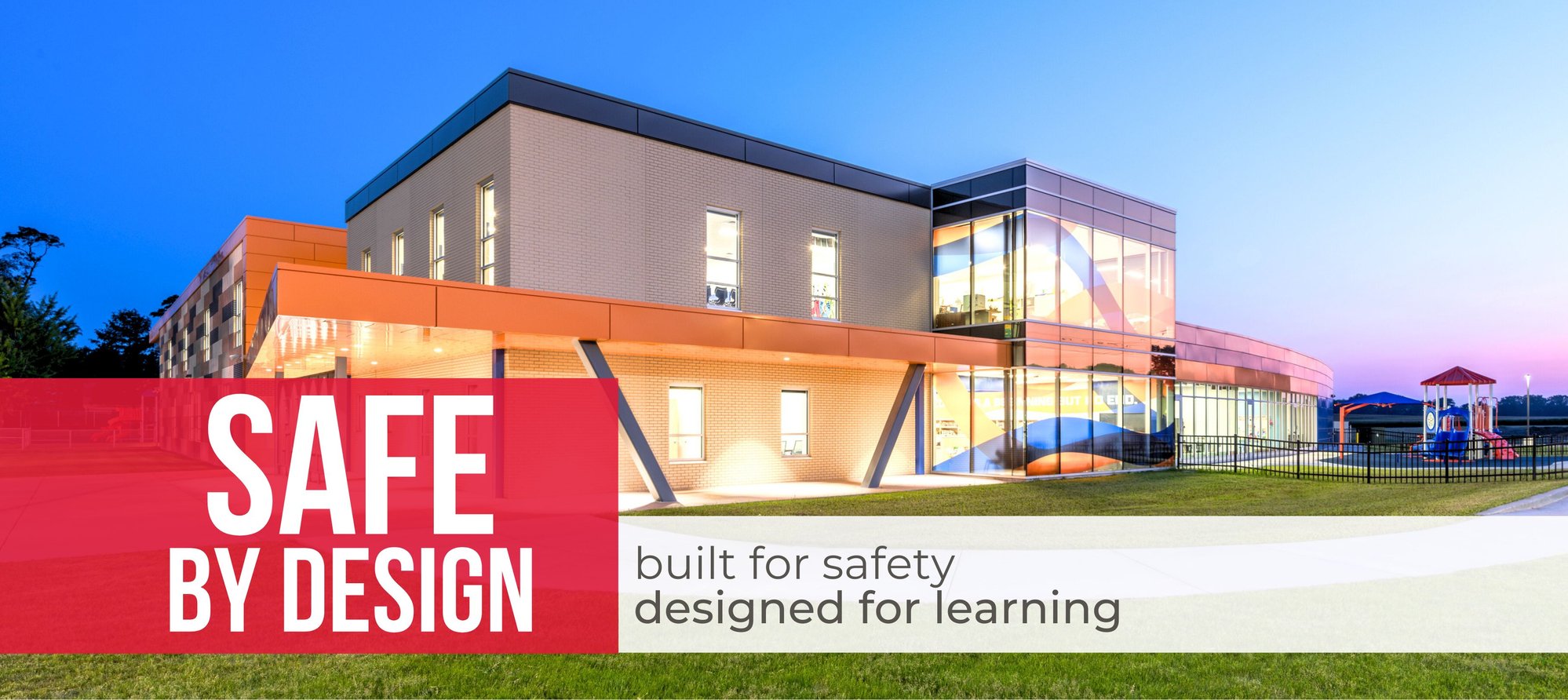
Built for Safety, Designed for Learning
|
|
Tornadoes and hazardous storms are a fact of life in the Midwest. So far in 2025, Illinois has recorded well over 113 tornadoes—more than double its typical annual average of about 54—while Missouri shattered its average of roughly 45 tornadoes per year, with over 117 confirmed by midyear. Both states are experiencing one of their most active tornado seasons on record. The 2015 International Building Code requires all new or significantly renovated K-12 school buildings located in areas with a 250 mph tornado design wind zone to include ICC 500-compliant storm shelters capable of withstanding winds up to 250 mph. It’s a critical requirement—but also an opportunity. |
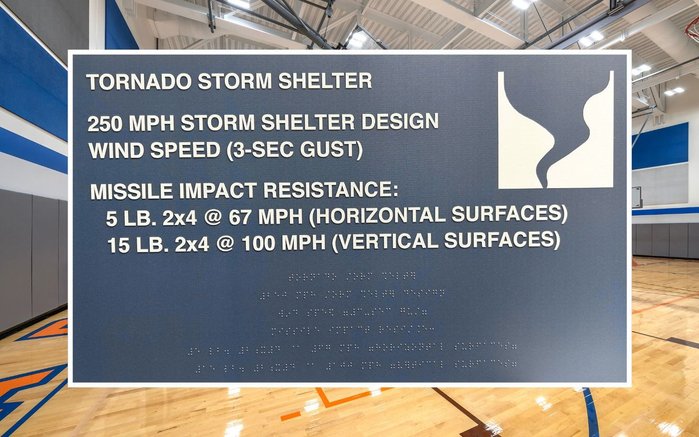
It’s no surprise that storm safety shapes school design in the Midwest, where tornadoes are a constant threat, especially in Illinois and Missouri.
The common solution? Try to find a space to serve double-duty or somehow tack a shelter onto the design.
Many school designs tuck the storm shelters away in a dual-use space, just trying to get more bang for the buck. But what if we went further—designing the shelter not as a box to check, but as a driving force behind the building and program itself?
That’s exactly what we did for Pana CUSD #8’s new elementary school.
The Heart of Safety
|
|
In the recently completed Pana Elementary School, safety didn’t take a backseat to design—it led the way.
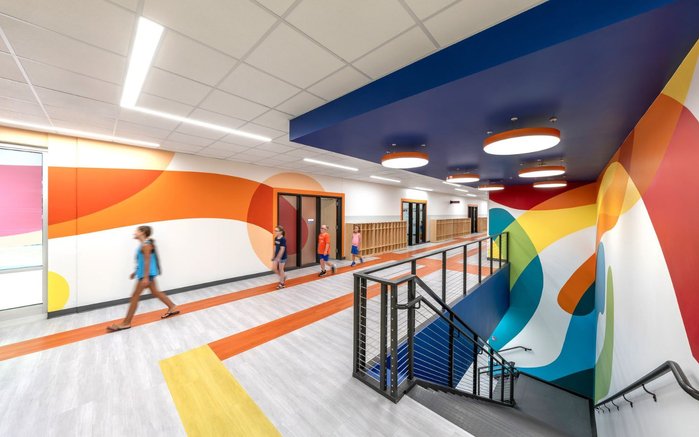
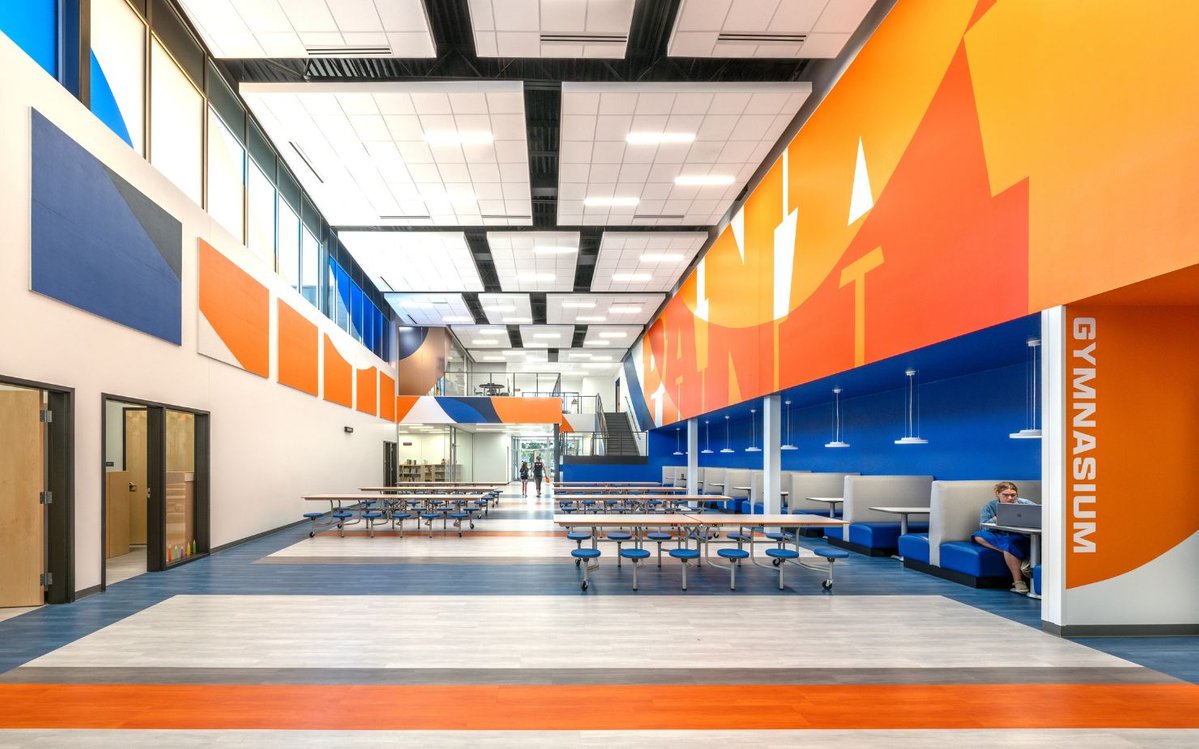
Replacing two aging schools, the new elementary is organized around a central commons and gym, which doubles as the storm shelter. This space isn’t just a compliance measure—it’s the organizing element of the entire building. PreK–2 classrooms sit on the first floor, with grades 3–5 above. Pods wrap around the core of shared spaces, with a vibrant feature stair and commons that embody school spirit. From every learning neighborhood, students are just steps from the shelter.
|
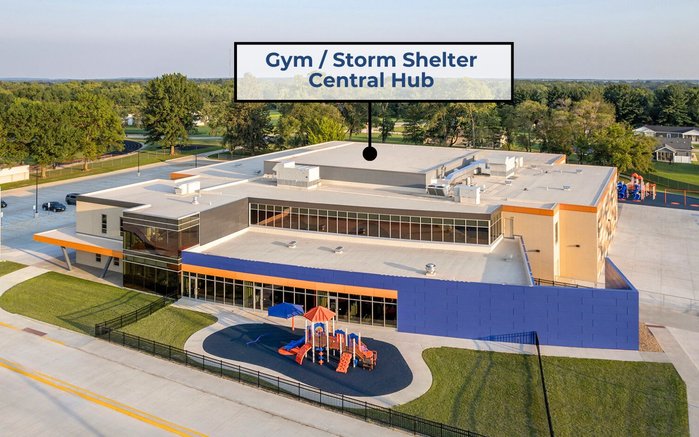
With storm shelter requirements, it's often difficult to provide openings or windows into that space. Rather than treating the shelter as a windowless “box” pushed to the edge of the school, the design leveraged its inherent solidity as the literal and structural core. This simplified nearby building systems, allowed required shelter restrooms to double as daily-use facilities, and created a space that feels familiar and functional for students even if they must use it in an emergency. And because of its central location, the shelter is always close—just across the hall or around the corner—no matter a student’s age or classroom.
|
|
|
Shelter with Purpose
|
|
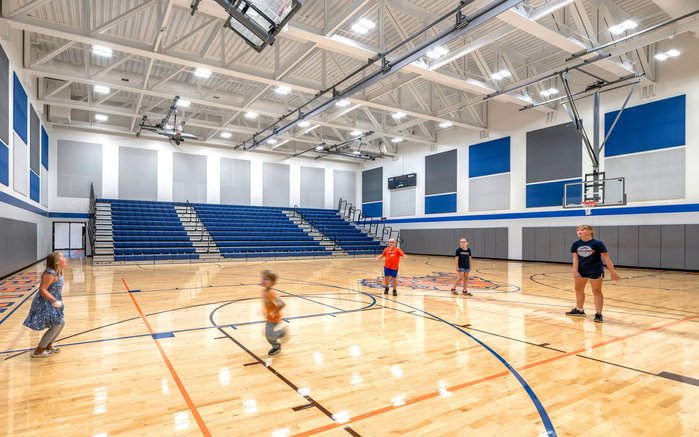
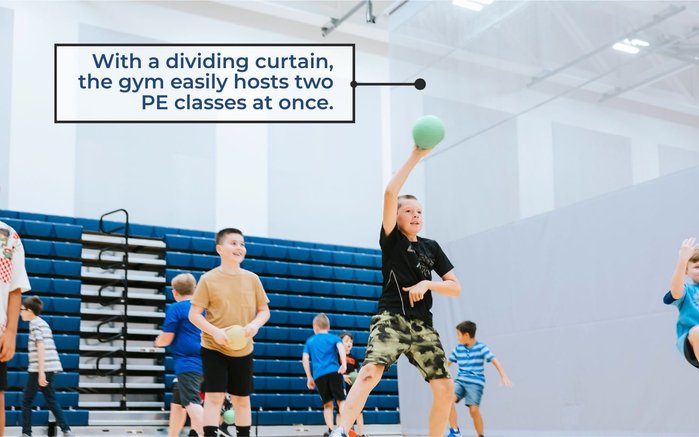
Designed with intent, this storm shelter doesn’t just sit idle. It’s active, flexible, and fully integrated into the learning environment—promoting collaboration and movement. With a dividing curtain, the gym easily hosts two PE classes at once. Separate dining and play areas—a major upgrade from the old combined gym-cafeterias—allow for more fluid scheduling and programming. Safety circulation was carefully considered: short corridors ending in exits or stairs ensure efficient and secure movement during emergencies.
Even better? The shelter is large enough to support the school’s full capacity plus students from nearby district facilities. |
Innovation at the Core
By making the storm shelter the centerpiece of the design, Pana Elementary turns a code requirement into a strength. What could have been a blank, utilitarian box is instead a vibrant hub, a community asset, and a flexible space that enhances daily life for students and staff. It’s a reminder that smart, creative design can meet code—and exceed expectations.
By putting safety at the center of the plan—literally and figuratively—we’re showing that compliance doesn’t have to compromise creativity. In fact, it can inspire it.
Read more about the innovative solution for Pana CUSD #8.

Principal | Director of K-12 Education Design |
Since joining the firm in 2007, Damien has been highly engaged in a variety of PK-12 work across the company. His focus and passion relate to long range facility planning, community engagement, user engagement and programming, and design and planning of PK-12 facilities. As co-director of BLDD's PK-12 design group, Damien continues to push the ways the firm thinks about design solutions for our clients.
|